


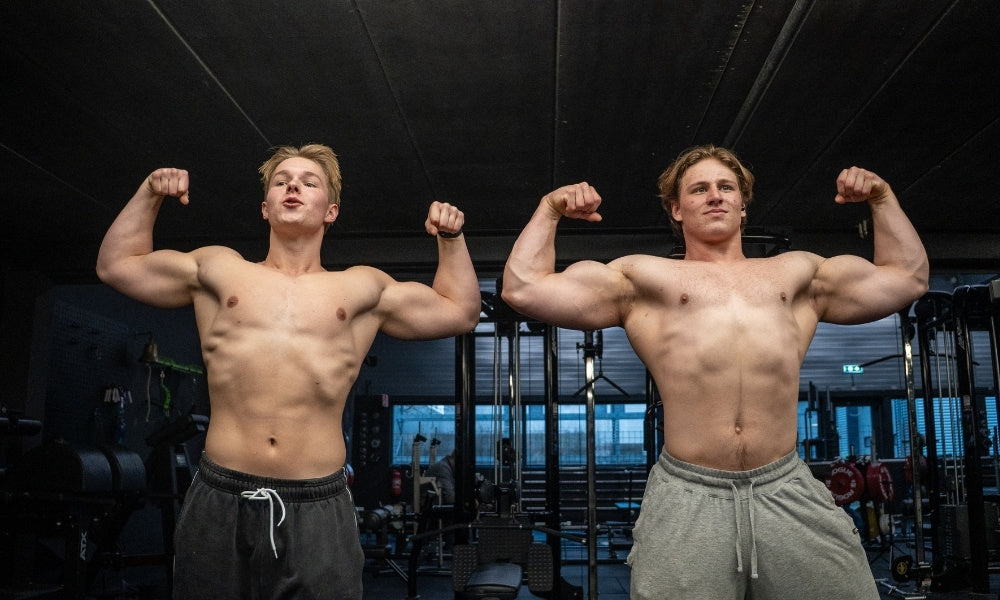
In short: bodybuilding is training and eating with one main goal, muscle growth (hypertrophy) and a physique that looks muscular, symmetrical and lean. The goal isn't to break records, but to build muscle mass and make it visible through a relatively low body fat percentage. This requires a combination of structured training, appropriate nutrition, and sufficient recovery. Bodybuilding isn't a single training style, but an approach you can maintain over time. In this article, you'll learn exactly what bodybuilding entails, what its goals are, when you can call yourself a bodybuilder, and how this sport compares to other strength sports. We'll also discuss health, common misconceptions, and how to get started in practice.
What is the purpose of bodybuilding?
The primary goal of bodybuilding is hypertrophy: the increasing muscle fibers. This is done by repeatedly applying training stimuli to serve that force the body to adapt. In sports science Muscle growth is mainly linked to mechanical tension, training volume and metabolic stress. You can create these stimuli in several ways, as long as progression and consistency are present.
In practice this means training with a broad repetition range, often between 6 and 15 repetitions per set. Heavier sets and Lighter sets can both contribute to muscle growth as long as the total Training volume and execution are correct ( Schoenfeld et al., 2017 ). Bodybuilding is therefore less about one maximum lift and more about the total picture per week.
When are you a bodybuilder?
You don't have to have competitive ambitions to be a bodybuilder to be. As soon as you train specifically with the goal of building muscle mass and you By tailoring your nutrition and recovery accordingly, you apply the principles of bodybuilding. For recreational athletes and podium athletes, the level of detail differs and discipline, not the basics.
The core remains the same: hypertrophy-oriented training, consume sufficient protein and energy and take recovery seriously. Competitive bodybuilding adds aesthetic criteria and peak periods to this, but does not change the foundation.

Is bodybuilding healthy?
Bodybuilding can be healthy, as long as it is natural and is performed in a balanced way. Large observational studies show that muscle strengthening training is associated with a lower risk of premature mortality and chronic diseases. Already 30 to 60 minutes of strength training per week is associated with a lower risk of, among other things, cardiovascular disease vascular diseases and diabetes ( Momma et al., 2022 ).
Problems arise mainly at extremes. Very low body fat percentage, long-term energy deficiency and the use of anabolic steroids significantly increase health risks. Reviews link anabolic agents to hormonal disruptions and cardiovascular damage ( Pope et al., 2014 ). Doping-free bodybuilding, with attention to recovery and nutrition, fits within a healthy lifestyle.
What is the difference with other strength sports?
The difference lies mainly in the purpose of the training.
Bodybuilding focuses on muscle size, symmetry and definition.
Powerlifting focuses on maximum strength in the squat, bench press and deadlift.
Strongman is all about functional strength and performance under heavy loads
circumstances.
Calisthenics primarily uses body weight to build strength and control
to build.
Although the training resources overlap, the priority. This distinction is also described by Healthline , among others, which classifies strength sports based on training goals and performance requirements.
Want to learn more about bodybuilding?
In our e-books about training and nutrition we will more in-depth information on hypertrophy, training progression, and recovery. These are not free, but intended as a deepening for athletes who want to improve their approach understand and substantiate.


How do you start bodybuilding?
1) Train smarter, not just harder
Start with two to three full-body workouts per week or a simple upper/lower split. Combine compound exercises with isolation and gradually increase the weight, repetitions, or sets. Both heavy and light loads can be effective, as long as progression is observed ( Schoenfeld et al., 2009 ).
2) Eat to gain muscle mass
A protein intake of around 1.6 grams per kilogram of body weight per day is sufficient for maximal muscle growth in most athletes ( Morton et al., 2018 ). Combine this with a slight calorie surplus to gain lean body mass. to build.
3) Recovery is key
Muscle growth happens outside of the gym. Sleep 7 to 9 hours a night, schedule rest days, and monitor your stress levels. Without recovery, progress will stall.
Supplements that work best for bodybuilders
Supplements do not replace training or nutrition, but can support when the foundation is in place. Consider protein supplementation if insufficient dietary intake and pre-workout formulas that support training output. The effectiveness always depends on dosage, context and consistent use, not of claims.


Conclusion: What is bodybuilding?
Bodybuilding is a hypertrophy-oriented way of training and life. It's all about building muscle mass in a targeted manner, body fat percentage master and consistently work on a strong and symmetrical physique. Research shows that strength training offers clear health benefits when it is applied naturally and in a balanced way. Start simple, train progressively, Eat enough protein and prioritize recovery. If you understand that basic, then understand what bodybuilding really is.
Frequently Asked Questions About What Is Bodybuilding
What is the difference between bodybuilding and fitness?
Fitness is a broad term that also encompasses fitness and general health. Bodybuilding focuses specifically on muscle growth and body composition.
Do you have to train hard for bodybuilding?
Heavy weights can be helpful, but aren't required. Muscle growth can be achieved with various loads as long as the total training volume and progression are sufficient.
Is bodybuilding suitable for beginners?
Yes. Beginners often respond strongly to training and build muscle mass relatively quickly, provided they train consistently and eat enough.
How quickly do you see results with bodybuilding?
Beginners often see visible changes within a few months. In the long run, progress becomes more gradual and requires more planning and patience.
Sources:
Momma, H., et al. (2022). Muscle strengthening activities
and risk of mortality . British Journal of Sports Medicine, 56(13), 755–762.
https://bjsm.bmj.com/content/56/13/755
Morton, R.W., et al. (2018). A systematic review,
meta-analysis and meta-regression of protein supplementation . British
Journal of Sports Medicine, 52(6), 376–384.
https://pubmed.ncbi.nlm.nih.gov/28698222/
Pope, H.G., et al. (2014). Adverse health consequences
or anabolic-androgenic steroids . The Lancet Psychiatry.
https://pubmed.ncbi.nlm.nih.gov/19204579/
Schoenfeld, B.J., et al. (2009). The mechanisms of
muscle hypertrophy and their application to resistance training . Journal of
Strength and Conditioning Research.
https://pubmed.ncbi.nlm.nih.gov/20847704/
Schoenfeld, B.J., et al. (2017). Strength and
hypertrophy adaptations between low- vs. high load resistance training .
Journal of Strength and Conditioning Research.
https://pubmed.ncbi.nlm.nih.gov/28834797/
Healthline. (n.d.). Powerlifting vs. bodybuilding: What's the difference? https://www.healthline.com/nutrition/powerlifting-vs-bodybuilding


