


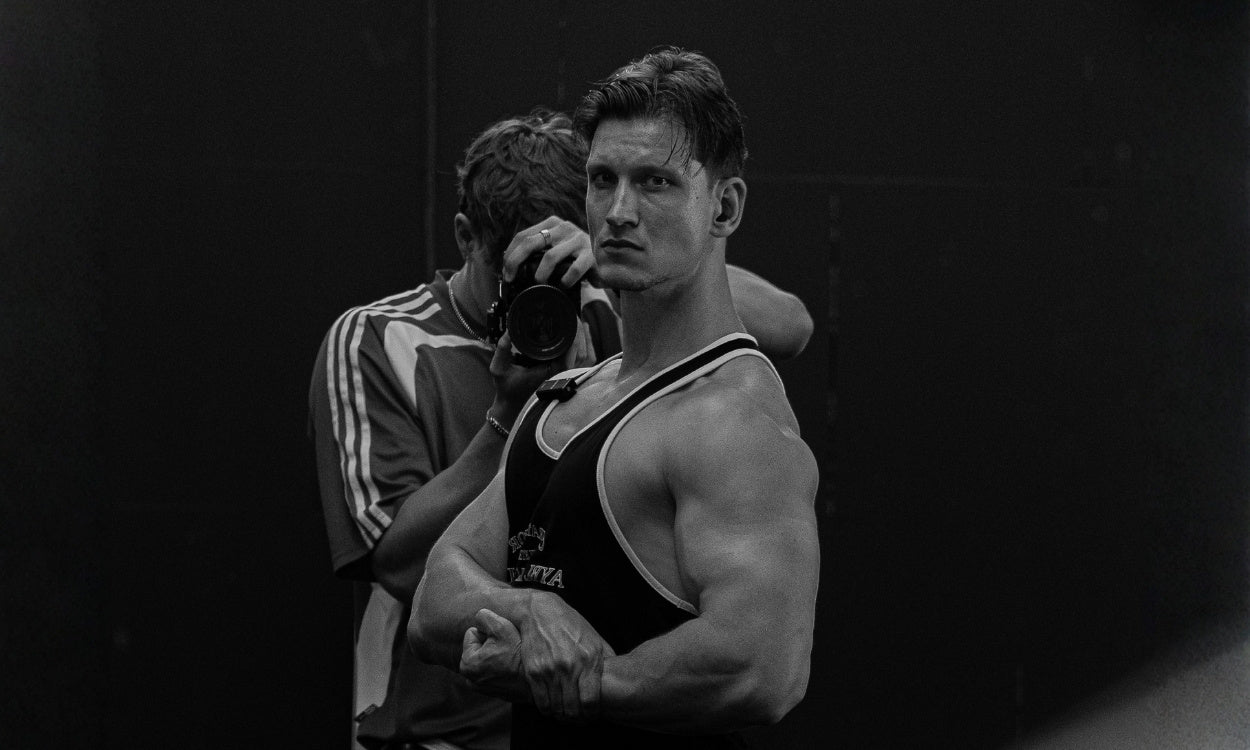
Hobbybuilding is targeted work on muscle mass, such as in bodybuilding, but as a hobby: without competitive ambition and without that Your whole life should revolve around perfect training and perfect eating. The bottom line is that the goal remains "to become more muscular and bigger", but the execution is more flexible. Think of less strict calorie tracking, less consistent exact follow the same schedule, but leave room for social moments such as a party or drinks. At the same time, progression remains important: a hobby builder trying to get stronger and more muscular in a way that is sustainable and which also remains fun.
What is hobbybuilding?
The leading definition is simple: hobbybuilding describes someone who trains with a bodybuilding goal (building muscle and physical develop), but does not place the “competitive discipline” at the center. In the In practice this mainly means: less strict control. No day-in, day-out same rules, no constant optimization of every choice, and less focus on perfect plan = perfect result.
That doesn't make hobbybuilding "aimless training". It makes the goal is very clear, but the route to it is more human. The bar is set with consistency over months and years, not with maximum tightness per week.
When are you a hobby builder?
Hobbybuilding is not an official label. It is about recognizable features. You're often close to hobbybuilding if this is true:
- Training with the goal of becoming noticeably more muscular, but you don't everything “on competition routine”.
- You nutrition is usually reasonable, but not completely dictated by tracking and perfect planning.
- You The schedule provides direction, but you will change exercises more quickly if that feels better.
- Choose progression that fits your life (work, sleep, social), in instead of the other way around.
Important detail: Hobbybuilding is not about “no discipline.” It's about a different distribution of priorities.
Why should you do hobbybuilding?
The term hobbybuilding sounds new, but the behavior of a hobby builder has existed for years. In research on fitness and bodybuilding as a leisure activity, back that many athletes train from lifestyle, personal development and mental well-being, not from competition or profession ( Oborný & Ferenc, 2019 ).
This ties in with a key point of hobbybuilding: intrinsic motivation (you train because you think it is important or fun) is often easier to maintain than motivation that mainly revolves around external deadlines. Competition can be motivating, but it can also increase pressure and tightness. Hobbybuilding makes room for ambition without a stage or “peak week” is needed to make it feel serious.

What is the difference between hobbybuilding and bodybuilding?
Hobbybuilding vs. competitive bodybuilding
Competitive bodybuilding has a clear goal: a competition moment. This drives training choices, diet, timing, and Stress management. In qualitative research with competitive bodybuilders, described how preparation and performance pressure can require strict routines, strategy and high mental investment ( Willmott et al., 2025 ).
Hobbybuilding isn't about competition logic: you still train with a clear goal, but you're not supposed to maintain strike tracking, perfect execution, and a fixed routine all the time.
Hobbybuilding vs. "just working out"
Many people “exercise” with general goals: healthier become, feel fitter, become a little stronger. Hobbybuilding is more specific: it revolves around muscle building as the main project. The training is therefore more often more targeted (progression, overload, sufficient volume), even if the execution more flexible.
Hobbybuilding vs. powerlifting
Powerlifting focuses primarily on performance in specific lifts (1RM). Hobbybuilding focuses primarily on physical development (muscle mass) and often on a wider choice of exercises. Getting stronger helps, but is usually a means to an end, no end goal.
Scientifically proven sports supplements
Discover scientifically proven sports supplements that can help you better coordinate your training, nutrition, and recovery. They complement the basics: consistent training, enough food, and good sleep.


Training and muscle building within hobbybuilding
Muscle building remains muscle building, even if you do it as an "additional" does. The basic principles don't change: you need repeated stimuli, sufficient training volume, and progression over time. A review about hypertrophy programs show that muscle growth can be achieved with different approaches are being pursued as long as the core variables (such as total stimulus/volume, intensity and progressive overload) are correct ( Alves et al., 2020 ).
So the difference is not in "different physiology", but in the strategy behind the training. Hobbybuilding often chooses an approach that you can use in the long term. can maintain for a period. This may mean that you prefer three to four solid sessions per week, then a schedule that seems perfect on paper but in reality real life keeps getting stuck.
There is a nuance to this. Flexibility works especially well if you still maintain a basis of repeatability. If every training is completely is random, it becomes more difficult to track progress. That's why Hobbybuilding usually works best with a simple structure: clear main lines (muscle groups, movements and a form of progression), with space to vary the execution per week or per training.
Health, motivation and long term
Strength training has clear, practical goals: you become stronger, you maintain or build muscle mass and you function better in daily movements. This is in principle independent of competition and also independent of an extreme lifestyle. At the same time, you see in fitness culture that identity and “rules” can vary greatly by subgroup. In research on 'drug-free For example, bodybuilding' describes how groups within the scene are active monitoring what belongs and what doesn't, and where the boundaries are ( Liokaftos, 2018 ).
Hobbybuilding can help reduce that social pressure. It makes it more natural to train ambitiously without pushing yourself constantly having to compare with competition standards, discussions about doping or an all-or-nothing way of life.
Conclusion: what is hobbybuilding?
Hobbybuilding is muscle building as a hobby: you train with a clear bodybuilding goal, but without competitive ambition and without the feeling that everything has to be perfect to achieve results. The core is that you You can be flexible in your schedule and diet, as long as you take the basics seriously: consistent training, choose an approach that you can repeat and keep in mind keep focusing on progress. Everything that comes on top of that: every meal exactly planning, tracking everything or making big social sacrifices can help if you want, but it is not a requirement to be a “real” hobby builder.
References:
Alves, R.C., Prestes, J., Enes, A., de Moraes, WMAM, Trindade, TB, de Salles, BF, Miranda, H., & Roberto, J. (2020). Training Programs Designed for Muscle Hypertrophy: A Comprehensive Review. Sports. Click here
Liokaftos, D. (2018). Defining and defending drug-free bodybuilding: A current perspective. International Journal of Drugs Policy. Click here
Oborný, J., & Ferenc, I. (2019). Fitness and Bodybuilding as a Physical Activity and its Importance for Physical Development, Physical Fitness and Mental Wellbeing. Advances in Social Sciences Research Journal. Click here
Willmott, E.F., et al. (2025). A multiple case study of competitive bodybuilders' experiences. Qualitative Research in Sports, Exercise and Health. Click here


