


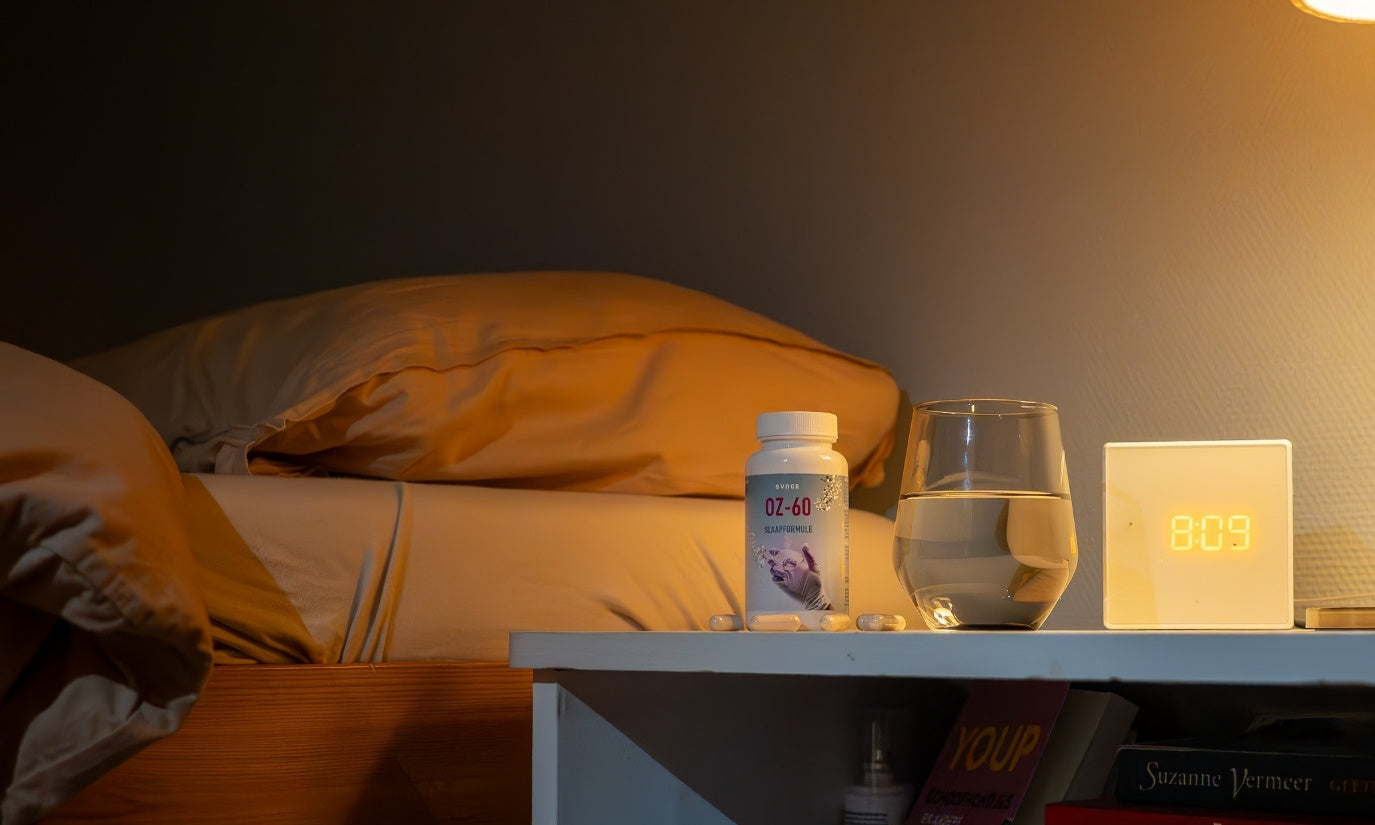
If the question is which magnesium is most logical for sleep, magnesium bisglycinate often comes up first. This doesn't mean that research definitively proves bisglycinate works better than every other form, but it does mean that magnesium in general is associated with sleep, relaxation, and stress regulation, and that bisglycinate fits well in practice. The evidence for sleep is still modest, and not every study shows the same results. Nevertheless, when purely considering purpose, tolerability, and timing of application, magnesium bisglycinate is usually the most logical choice for sleep (Mah & Pitre, 2021; Abbasi et al., 2012).
Which magnesium should you take for sleep?
Not every form of magnesium is used for the same purpose. Some forms are more often chosen for bowel movements or general supplementation, while other forms are popular in evening formulas and sleep products. If you purely look at sleep, the most important point is not just the form itself, but also the context: do you have a low magnesium intake, do you experience restlessness, or do you have trouble falling asleep? The sleep literature primarily shows small improvements in people with sleep problems or a higher chance of low magnesium status, not necessarily in everyone with perfectly good sleep. Furthermore, direct comparisons between bisglycinate and other forms for sleep are scarce. This is precisely why the conclusion must remain cautious. Magnesium bisglycinate does not come out on top because it beats everything in large head-to-head sleep studies, but because it is the most logical form for an evening supplement within current literature and practice: not aggressively positioned, well-suited for relaxation, and without clear reasons to prefer another form for the night (Mah & Pitre, 2021).
Why should you take magnesium for sleep?
Magnesium is often taken before bed because it is involved in processes related to nervous system relaxation and sleep quality. In older adults with primary insomnia, a placebo-controlled study showed that magnesium supplementation was associated with shorter sleep onset latency, longer sleep duration, and less early morning waking (Abbasi et al., 2012). This is not proof that magnesium works strongly for everyone, but it does show that magnesium supplementation can have an effect in the right context.
A later review with meta-analysis also showed a cautiously positive picture, but with an important nuance: the overall quality of the evidence was low, and the studies were small. In other words, magnesium for sleep appears to potentially be useful, but it is not an automatically strong intervention for everyone. This is precisely why it is more logical to view magnesium as support for a good sleep routine, not as a replacement for it (Mah & Pitre, 2021).

Why magnesium for sleep for anxiety and stress?
Poor sleep and stress often go hand in hand. That's exactly why magnesium is so often found in evening supplements. A systematic review of magnesium and subjective anxiety and stress showed that magnesium supplementation may be most relevant for people with mild anxiety symptoms or stress sensitivity, but that the quality of evidence is variable and the studies are not always methodologically strong (Boyle et al., 2017). This means that magnesium is not a proven treatment for anxiety, but there is enough reason to take it seriously as a supportive factor.
For sleep, this is relevant because restlessness, tension, and difficulty relaxing often disrupt the transition to sleep. If magnesium does anything, it is likely through relaxation and tension regulation rather than a direct "sleep aid" effect. The evidence here is therefore mixed: there are indications that magnesium can be useful for stress and tension, but the evidence is not strong enough to make big promises about it (Boyle et al., 2017).
Does magnesium for sleep help your muscles?
Magnesium plays a role in normal muscle function, especially in the interplay between contraction and relaxation. Therefore, it is logical that people also link magnesium to evening muscle rest, cramps, or a less "nervous" feeling in the body. At the same time, you have to distinguish between physiology and hard outcomes from sleep research. The fact that magnesium is important for muscles does not automatically mean that magnesium before sleep provides noticeable muscle recovery or less cramping for everyone.
The literature is much less convincing on that point. For general muscle function, magnesium is undoubtedly relevant, but for the question of whether magnesium before sleep noticeably helps muscles, the direct evidence is more limited than for sleep and relaxation. The most sober conclusion is therefore that magnesium biologically fits well with muscle relaxation, but that you should not attach too many specific recovery claims to it if these have not been directly investigated (Abbasi et al., 2012).
The help of a sleep supplement for better sleep
A sleep supplement can be useful as a complement to sleep habits, especially if nutrition, rest periods, and evening routines are in order but you are still looking for extra support. In that context, the Sleep Formula is a logical choice for sleep, partly because it contains magnesium and because magnesium is often chosen in supplements aimed at relaxation and nighttime. This makes such a formula particularly practical: not as a miracle cure, but as part of a broader approach to better sleep.

Conclusion: which magnesium should you take for sleep?
The fairest conclusion is that research does not conclusively prove that magnesium bisglycinate outperforms every other form for sleep. Nevertheless, when considering all factors, it emerges as the most logical choice. This is because magnesium in general has a modest but seriously researched association with sleep and relaxation, while bisglycinate practically fits well with an evening supplement and is not a form primarily chosen for other purposes. So, if you ask which magnesium is most logical for sleep, magnesium bisglycinate is the best answer — not because it is definitively proven superior, but because, scientifically, it best aligns with what you want from a magnesium supplement for the night.
Frequently asked questions about magnesium and sleep
Is magnesium bisglycinate better for sleep?
This has not yet been definitively proven in direct comparative sleep studies. What is clear, however, is that magnesium in general can have small benefits for sleep and relaxation, and that bisglycinate is therefore a logical choice for evening use (Mah & Pitre, 2021; Abbasi et al., 2012).
When should you take magnesium for sleep?
Most studies on magnesium for sleep use daily intake in the evening or before bed, often for several weeks. The effect therefore seems to lie more in consistent use than in a one-off quick effect (Abbasi et al., 2012).
Does magnesium also help with evening stress?
There are indications that magnesium supplementation can help with mild stress and tension complaints, but the evidence is not strong enough for major conclusions. The most defensible position is that magnesium can be supportive in some situations, especially when stress and restlessness interfere with sleep (Boyle et al., 2017).
Sources:
Abbasi, B., Kimiagar, M., Sadeghniiat, K., Shirazi, M. M., Hedayati, M., & Rashidkhani, B. (2012). The effect of magnesium supplementation on primary insomnia in elderly: A double-blind placebo-controlled clinical trial. Journal of Research in Medical Sciences, 17(12), 1161–1169. Click here
Boyle, N. B., Lawton, C., & Dye, L. (2017). The effects of magnesium supplementation on subjective anxiety and stress—A systematic review. Nutrients, 9(5), 429. Click here
Mah, J., & Pitre, T. (2021). Oral magnesium supplementation for insomnia in older adults: A systematic review & meta-analysis. BMC Complementary Medicine and Therapies, 21, 125. Click here
Tarleton, E. K., Littenberg, B., MacLean, C. D., Kennedy, A. G., & Daley, C. (2017). Role of magnesium supplementation in the treatment of depression: A randomized clinical trial. PLOS ONE, 12(6), e0180067. Click here


